
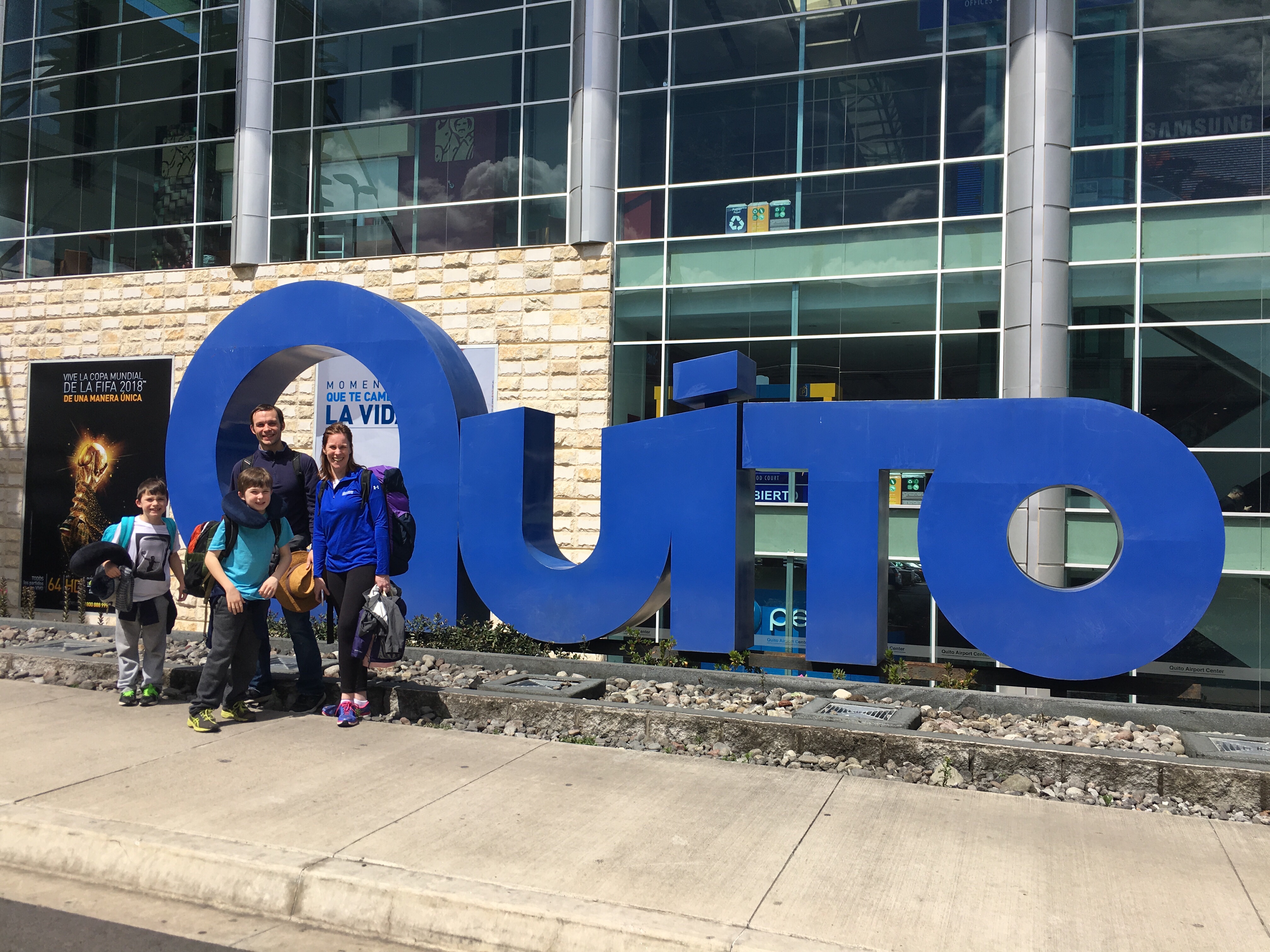
We arrived in Quito soon after 10am on Sunday morning after a painless set of flights. Customs were a breeze (one backpack each helps). Jose, our in-country coordinator for Global Crossroads, met us just inside the doors to depart. He remarked thinking the boys were older. I responded they certainly will be after the trip.
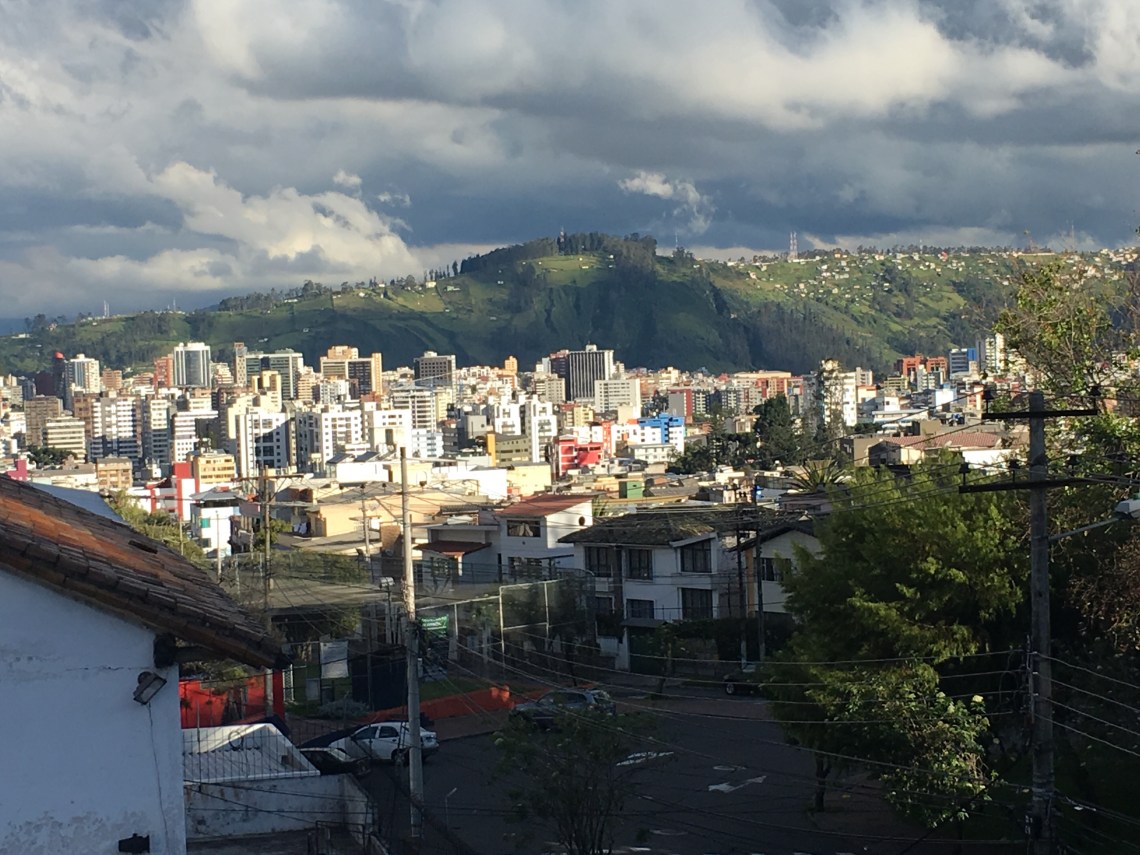
The airport was only 15 miles away but the trek into the city offered many startling and breathtaking views. Quito rises quickly from all roads leading up — an impressive city on the hill — and our course involved a series of switchbacks to get there. Jose pointed out major landmarks along our route and shared some of the 500-year history of the area as we continued. We arrived at la casa de la familia anfitriona, met Maria and Marta, and then settled into our rooms for 20 minutes.
Sunday offered a full afternoon to get acclimated to our surroundings. With Maria as our guide, we walked from the western edge of town across several of the major routes north-south to visit an open-air market, the nearby supermercado, and understand where Jose’s office was in relation to our casa. From there we caught the bus across town to visit the mall (yes, I was surprised as you may be) for some safe lunch. Instead of riding the bus back, we opted to walk across La Carolina Park, which offered a bustling array of organized and pick-up sports, paddle boats in a small human-made lake, street performers, and “vendors” of all types (more on that in a later post). Exhausted, we caught a bus on the opposite end of the park for much of our last leg home. Maria prepared a wonderful Ecuadorian meal of fish, rice, and ensalada before we bid buenas noches for an early night.
Monday was a slow start for the Perrin crew. Quito is one of the highest capital cities in the world at 2,850 meters, and elevation is a factor for new arrivals. We started off with a desayuno of fruit, bread, and coffee (the boys had tea), before Maria escorted us to Jose’s office to start our day. Jose went over the considerations for each of the projects happening across the city then drove us to Camp Hope, an orphanage on the northern fringe of the city. After introductions and a tour (thanks Jose for staying to translate) we worked the morning and helped serve lunch before finding our way back downtown for 90 minutes of Spanish lessons. Once finished, we opted to appreciate some unstructured time to explore La Mariscal. Although the district is known as “gringolandia”, it at least allowed us a chance to wander, practice using our Spanish map, and get our bearings on how the rest of the city was laid out. After a snack (our boys are used to normally eating more than just 3 meals a day), we trekked back to our house just as night was falling, washed up, and then joined Maria and Marta to share our experiences for the day over potatoes, guacamole, rice, beets, and what the boys described as chopped up hotdogs. Now they all sleep peacefully, hopefully for the entire night in preparation to do it all again tomorrow. Buenas noches!

 Perrin Family Adventures