
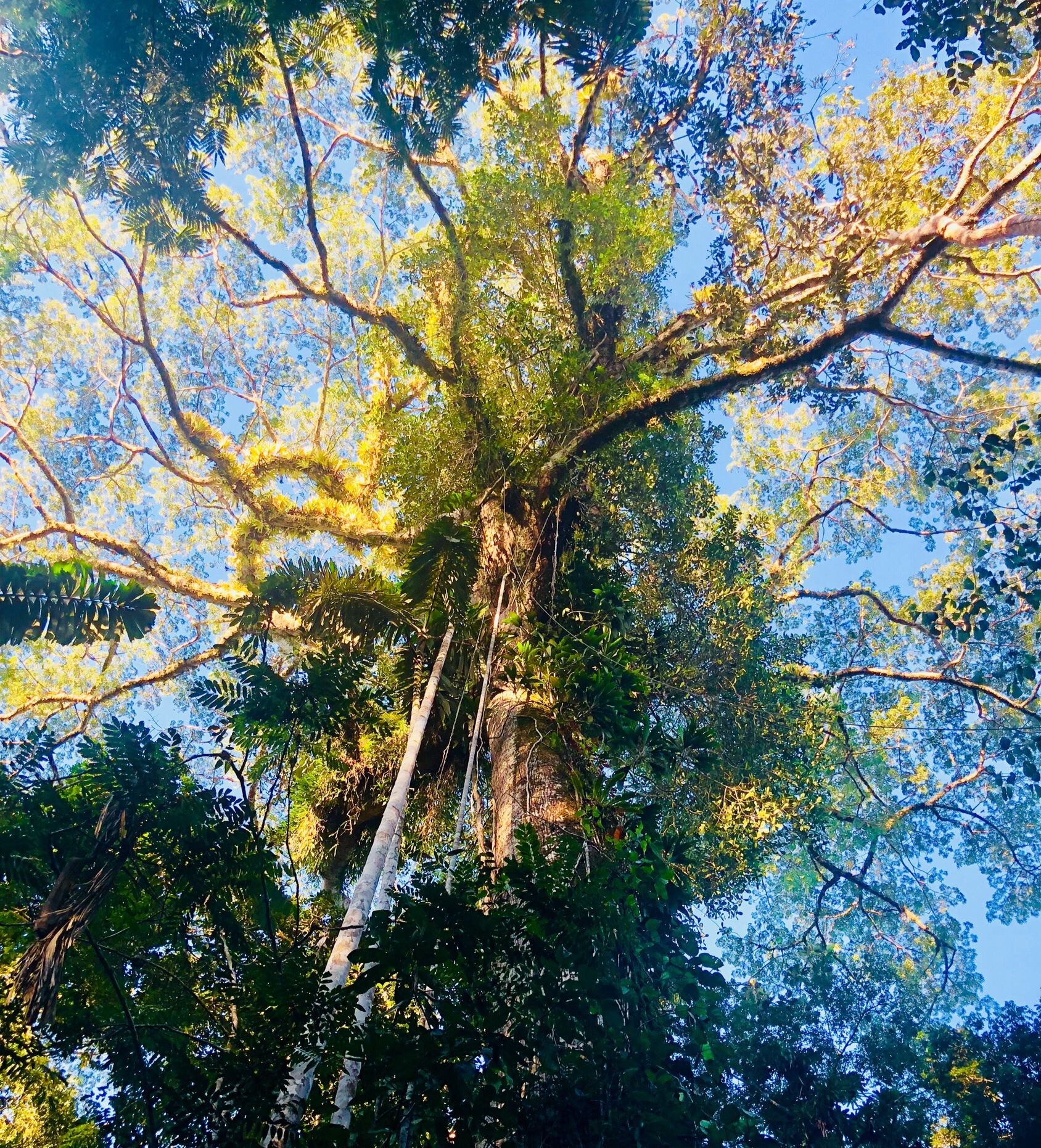
“In the jungle, the mighty jungle, the lion sleeps tonight. Wimoweh, wimoweh, wimoweh, wimoweh…” -Solomon Linda (popularized by The Tokens)
To be fair, there aren’t technically any lions in the Cuyabeno. However, unlike the Galápagos, a predatory hierarchy exists here in the Amazon jungle. Humans included…as both predator and prey.
Cuyabeno Wildlife Reserve is one of South America’s largest nature reserves, encompassing the basin of two major rivers: Rio Cuyabeno and Rio Aguarico. The reserve was created in 1979 in response to a national conservation movement rallying to preserve pristine areas of rainforest and other biodiverse ecosystems for future generations. Oil exploration in Ecuador began in the 1920s. After a significant increase in production after the discovery of a rich oil field under the Amazon rainforest, this tract of land was designated for conservation in response to the resulting environmental degradation. This reserve also continues to serve as the homeland for a handful of indigenous communities and protects against further development and resource extraction by non-native peoples.
Over the past 30 years an entire industry of ecotourism has emerged in the area, which helps support the local populations in a more environmentally sustainable way. Nicky Lodge along the banks of the Rio Cuyabeno is one of those operations. The site is comprised of six huts capable of accommodating two sets of travelers each, built around a central lodge used for meals and shared living space. A solar array provides for power on sunny days, coupled with a backup generator utilized for a few hours every evening for cabin lights, operate a blender (fresh juices at dinner) and recharging camera/iPhone/Kindle batteries. Each hut was equipped with running water diverted from the river for showers and toilets, along with mosquito nets over every bed for a peaceful night’s sleep.
Our tour into the jungle started at the bridge where the one paved road in the region crosses the Cuyabeno River. We loaded into a 10-person motorized canoe and set off downstream for a 4-hour journey to the lodge. The river was a murky brown as it had been raining for the previous 2-3 days. Our guide named Evi remarked this was actually good luck for us since all of the animals should be coming out of the deeper portions of the jungle to dry their fur and feathers, improving their chances of being discovered. Evi was right; our journey into camp did not disappoint. We saw two types of sloth, six species of monkeys, countless birds, and even an anaconda. Upon arrival at the lodge we were greeted with fresh papaya as our snack, settled into our hut, and had some free time ahead of the evening activity. An hour before sunset our guide took us on a walking tour through the jungle near camp, pointing out plant life and indigenous applications, along with plenty of insects, birds, reptiles, and frogs. Once the sun went down we pulled out flashlights and finished our trek searching for insects in the dark. Our last activity of the evening involved switching off all the lights to experience the sounds of the jungle in complete darkness. It was an eery two minutes that seemed far longer.
Our second day commenced with a 2-hour motor canoe ride to spot more animals along the river. Although it was dry when we embarked, the rain steadily picked up over the ride, soaking us in the process. (We’ll pack parkas instead of simple rain jackets in the future.) The sun thankfully emerged mid-morning ahead of our journey downstream to meet members of the local indigenous population and make yuca bread. Yuca, or cassava, is a starchy, fibrous root of a shrub that is native to South America. The process started with harvesting the yuca by pulling from the ground, then peeling and washing the root. Then all hands helped with the grating, spreading, straining, and sieving until the yuca became a (mostly) dry flour. The flour was pressed into a clay pan and heated over an open fire until the moisture was driven off and the bread, with a consistency of a thin tortilla made out of softened Triscuits, turned a nice golden brown. Our guide prepared a spicy tuna salad and we used the yuca bread to build soft tacos. Dessert included a tortilla made from moist yuca flour combined with mashed bananas, heated banana leaves over the fire, and then topped with fresh chocolate sauce. “Eat local” has taken on a whole new meaning for us.
Perhaps my favorite part of the journey was our canoe trek after dark. We started out by traveling upstream (busting through a few fallen trees) to look for pink dolphins before we arrived at the flooded forest of Laguna Grande. After a sunset swim in the river, we searched for cayman using only flashlights, which may be easier after dark due to the glow of their eyes, but undoubtedly not safer. Upon discovering one, we somehow navigated back to the lodge in our motor canoe (still not sure how, as I couldn’t see anything in the darkness) with our guide shining his flashlight into the trees to point out bats and find boa constrictors. Completely surreal.
The Amazon jungle is known as the “lungs of the earth”, with its abundant plant life scrubbing carbon dioxide from the atmosphere and releasing oxygen for animals to utilize and complete the cycle. Deforestation and degradation of this landscape — along with anthropogenic carbon emissions worldwide — has thrown this natural equilibrium completely out of balance. Experiencing the jungle first-hand has only reinforced my belief in its immense value to our planet and the critical importance of protecting it. We are very blessed to have visited the Cuyabeno and witnessed this precious landscape. Hopefully others will continue to be inspired by this special place…before it is potentially too late.


 Perrin Family Adventures
What an experience Cuyabeno had to be. Your boys will be talking about this trip all their lives.
Riding in the canoe at night had to be very scary, given that you already crashed through several downed trees.
HH is going to seem very very tame to the boys after this trip.
Travel safe and look forward to hearing more tales from the Perrin Family Adventures.
Jim
Sent from my iPad
>
LikeLike